Surface problems vs structural problems
Almost everything people dislike about an aging court falls into one of two buckets.
Surface problems — the slab underneath is sound, the top has worn out:
- Faded or chalky colour
- Worn or wrong lines
- Slick spots and lost texture
- Minor hairline cracking
These are a resurfacing job. The court comes back looking and playing like new for a fraction of a rebuild.
Structural problems — the base itself has failed:
- Cracks you can fit a coin into, or that keep coming back after repair
- Sections that have settled, leaving a lip
- Standing water that never drains
- Crumbling or spalling edges
Resurfacing over these hides them for one season. They come straight back through the new coating, and you have paid twice.
A quick test you can do yourself
After the next good rain, walk the court an hour later.
- Water gone, surface even? Almost certainly a resurfacing candidate.
- Puddles deeper than a nickel, or that sit for hours? The slope or base needs addressing first.
Then walk the cracks. Are they hairline and stable, or wide, branching, and stepped? Branching cracks that follow a pattern usually mean movement underneath.
The middle option people forget
Plenty of courts need neither a simple recoat nor a full teardown. Partial repair — cutting out and replacing a failed section, correcting drainage, then resurfacing the whole court — is often the right answer and it is far cheaper than starting over.
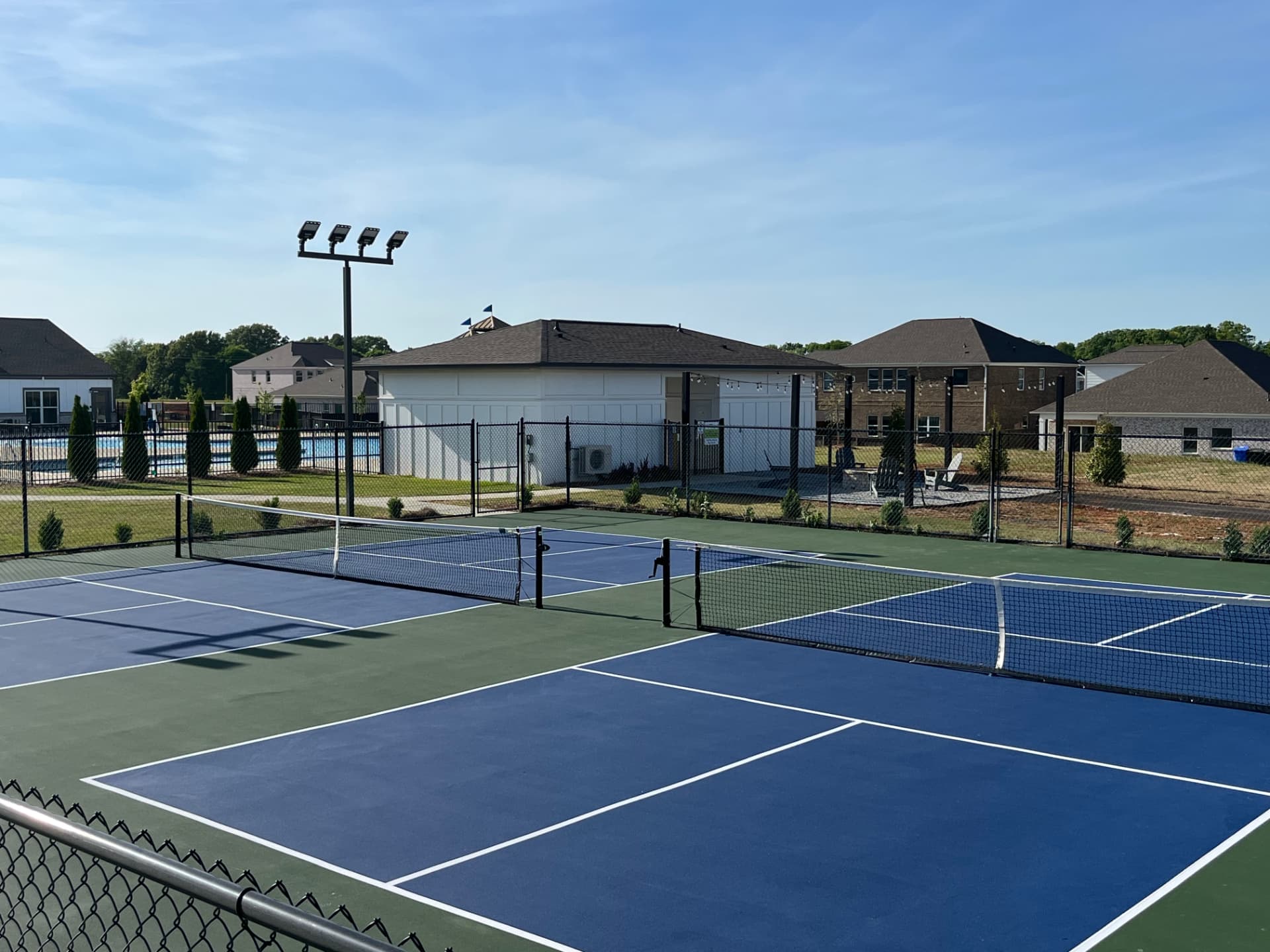
This is also how most tennis-to-pickleball conversions go: the existing slab is fine, it just needs the right layout and surface.
When we tell people to rebuild
We recommend a full rebuild when the base has failed across most of the court, when drainage cannot be corrected without regrading, or when the slab was never built for the load in the first place.
It is the more expensive answer, so we do not give it lightly. If your court can be saved, we will tell you.
Get an honest look
Send us a few photos after a rain — one of the whole court, and close-ups of the worst cracks. We can usually tell you which category you are in before we ever visit.